

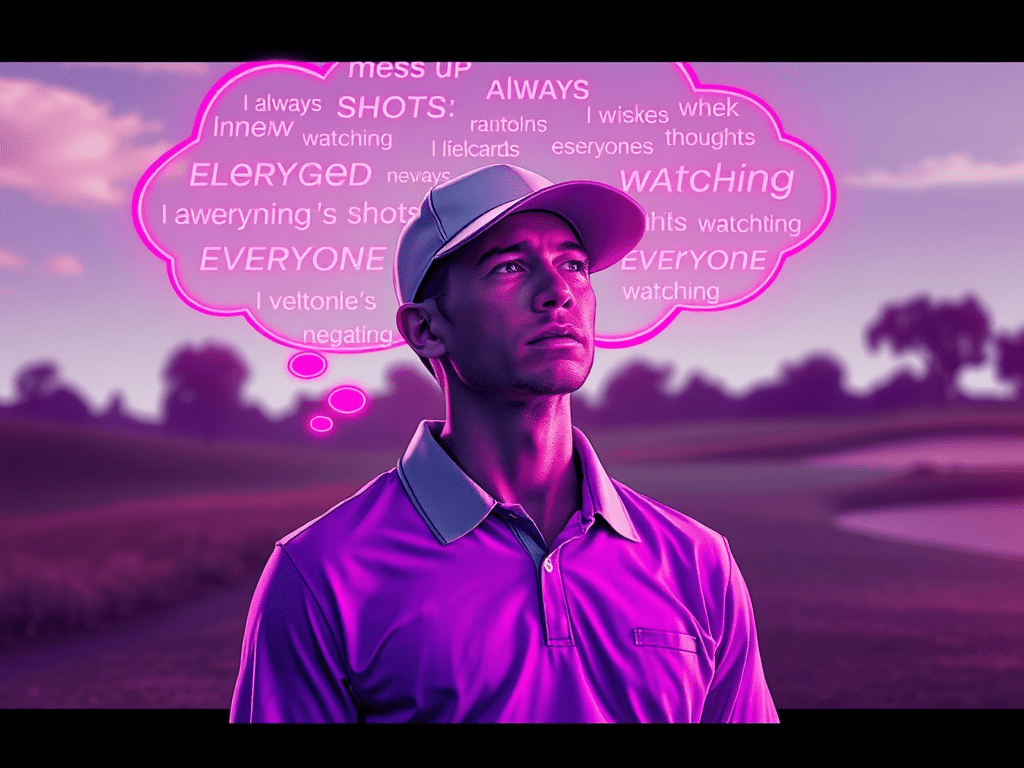
Golf is a game of mental resilience, yet our minds often work against us. One common mental trap is catastrophising—exaggerating a single negative event into a full-blown disaster. In golf, this might sound like, “If I play badly today, I’ll never play well again,” or, “If I hit a bad first tee shot, I’ll embarrass myself in front of everyone and everyone will think I’m a rubbish golfer.”
While it’s natural to feel frustrated after a bad shot or round, letting those feelings snowball can undermine your confidence, derail your performance, and sap the joy from the game.
Why Does Catastrophizing Happen?
Our brains have a tendency to create stories about what one mistake might mean. This is a survival mechanism designed to help us avoid danger, but in golf, it often manifests as irrational fears. When we believe one bad shot defines us, it distorts our perspective, leading to anxiety and overthinking.
Strategies to Combat Catastrophizing
- Focus on What’s True
When you catch yourself catastrophizing, ask, “Is this thought 100% true?” Chances are, it’s not. For instance, one bad hole doesn’t mean you’re a terrible golfer or that your game is doomed forever. - Reframe the Narrative
Replace extreme thoughts with balanced ones. Instead of “I’ll never improve,” try, “Everyone has bad days, but I can learn from this and move forward.” - Break It Down
Focus on the present moment rather than future consequences. If you hit a bad shot, think only about your next move, not the final score or what others might think. - Practice Gratitude
Remind yourself why you play golf in the first place—whether it’s for fun, exercise, or personal growth. This perspective helps keep bad moments in context.

On-Course Game: “The Reset Button”
Objective: Train your mind to bounce back from adversity without spiraling into catastrophic thinking.
- Setup: Identify a “reset button” ritual (e.g., a deep breath, tapping your club, pinching the peak of your cap, or visualizing hitting a mental “reset” switch).
- Rules: After a bad shot or hole, perform your reset ritual and move on to the next shot with a clear head. The last hole or shot is gone. You have to accept all outcomes. Move on, you’re only allowed to think about the current shot.
- Reward/learning: At the end of the round, reflect on how well you stayed in the moment. Make a list of all the negative thoughts you had and how you talked to yourself. Start to reframe these thoughts into positive reactions to bad shots or holes. Over time, this exercise reduces emotional reactions to mistakes.
Range Drill: “Worst-Case Scenario”
Objective: Build confidence by facing catastrophic thoughts head-on.
- How to Play:
- Imagine a worst-case scenario that might pop into your head during a round (e.g., “If I miss this shot, I’ll lose the match, and everyone will think I’m a failure”). Make 5-10 worst-case scenarios that you might encounter the next time you play.
- Write them down, then counter them with rational responses (e.g., “Losing this match doesn’t define me as a golfer or person. It’s just one match.”).
- Hit five shots while focusing on the rational response. This helps you practice replacing negative thoughts with positive ones in real-time.
- Imagine a worst-case scenario that might pop into your head during a round (e.g., “If I miss this shot, I’ll lose the match, and everyone will think I’m a failure”). Make 5-10 worst-case scenarios that you might encounter the next time you play.
Embrace the Present Moment
Catastrophizing takes the joy out of golf by turning small challenges into overwhelming fears. By focusing on what’s true, reframing your thoughts, and practicing techniques to stay present, you can break free from this mental trap. Remember, one bad shot—or even a bad round—doesn’t define you as a golfer or a person.
How do you reset when things start to spiral on the course? Share your thoughts in the comments below or follow me on Skillset and send me a message and I’ll get back to you.




 The Impact Bag Golf Blog
Leave a comment