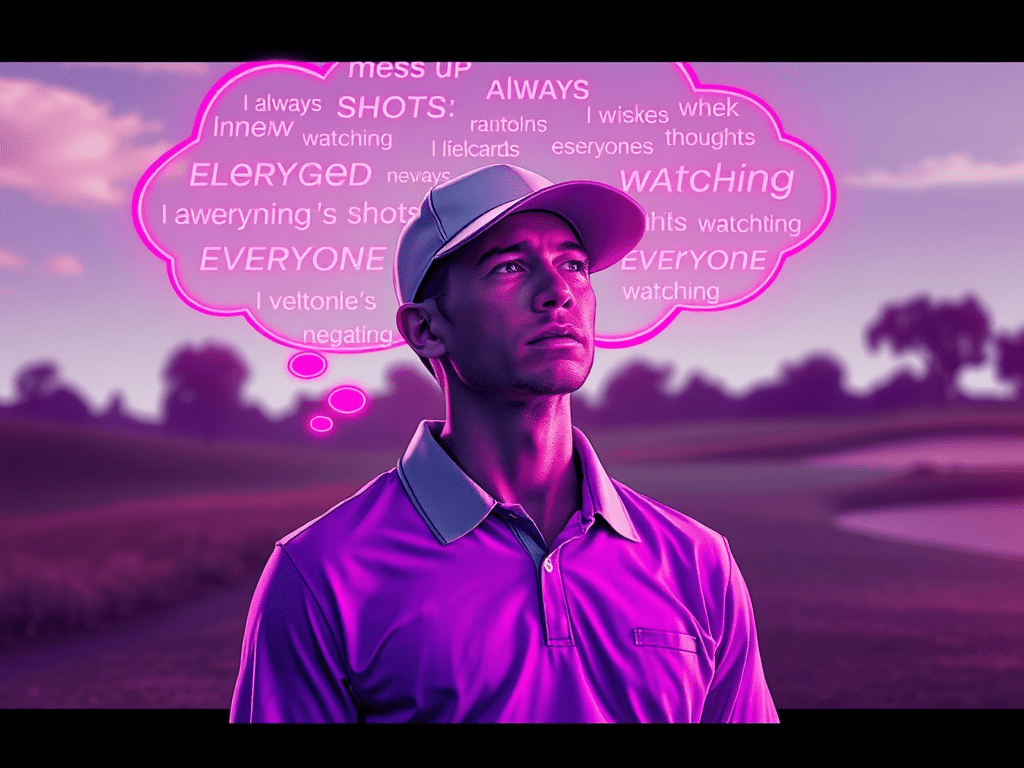
Every golfer has experienced that moment—standing over the ball with a quiet fear whispering, “Don’t chunk it… don’t blade it… You’re hopeless around the greens.” These are ANTs: Automatic Negative Thoughts that creep into your mind without permission. They’re fast, instinctive, often completely untrue ans sometimes not even noticed.
The key to mastering the mental game is not to pretend ANTs don’t exist—but to spot them, understand them, and then reframe them into something that helps you play better golf.

I’ve dealt with this personally. I once battled a long spell of chipping problems. The biggest breakthrough didn’t come from technique—it came from identifying the ANTs that kept screaming at me every time I stood over a chip. Once I recognised them, I stopped fighting them… and simply changed the plan until I could reframe the negative thought into something more helpful. If I spot an ANT arriving, I ask myself, “What are the best 2 options here?” (Mental Golf Type). This ensures I evaluate the shot and don’t force myself into playing a shot I am uncomfortable with. I then worked on releasing all tension from my body and hands and making fluid practice strokes, clipping the ground as I wanted to. Lastly, I got more in touch with my landing spot rather than trying to chip it close. These steps stop me from driving the handle at the ball and cleaning up contact, which was the big issue.
What Are ANTs in Golf?
Automatic Negative Thoughts are instant, unfiltered mental reactions to situations on the course, such as:
- “I always mess up shots like this.”
- “Everyone’s watching—I’m going to embarrass myself.”
- “I know I’m going to miss this putt.”
They’re quick (often unnoticed), emotional, and often exaggerated representations of reality. But if you don’t address them, they can shape your confidence, your decision-making, and ultimately your performance. They can also keep popping up if not addressed or recognised
Why Recognising ANTs Is So Important
The power of an ANT is in its speed—it shows up before you even realise it. But once you do recognise it, you immediately take back control.
When you identify an ANT, you give yourself the chance to:
- Interrupt unhelpful thinking
- Reduce anxiety
- Make smarter decisions
- Build confidence instead of eroding it
And most importantly: identifying an ANT doesn’t mean you have to fix it immediately. Sometimes the right move is to simply adjust your plan until there’s space to reframe it properly.
How to Recognise and Reframe ANTs
1. Pause and Notice the Thought
What it does: Helps you break the autopilot loop.
How to practice:
- On the course: As soon as you feel fear, tension, or hesitation, ask yourself, “What thought just went through my mind?” “Is it true?”
- In practice: After each shot, quickly note any negative self-talk that popped up. Becoming aware of the pattern is step one.
2. Name the ANT
What it does: Reduces the emotional power of the thought.
How to practice:
- On the course: Label it/recognise it—“That is an ANT,” “That’s catastrophising,” or “That’s overgeneralisation.”
- In practice: Write down common ANTs you notice so you can spot them more quickly next time.
3. Don’t Fight the ANT—Change the Plan
What it does: Keeps you playing confidently even when your mental state isn’t perfect.
My example: When I struggled with chipping, my ANT was:
“You’re going to chunk this.”
Instead of trying to suppress the thought, I changed the shot. Maybe a bump-and-run instead of using high loft. Maybe putt from off the green. Maybe aim for a safer landing area. Maybe success was just not having tension and making good contact.
The goal wasn’t to “fix” the ANT in the moment—it was to choose a shot I believed in to steadily build my confidence back.
How to practice:
- On the course: If a shot feels uncomfortable, choose a safer alternative. Build confidence first; reframe later.
- In practice: Simulate pressure and test alternative shots to find options you trust.
4. Reframe When You Have Time
What it does: Builds long-term confidence and weakens the ANT.
How to practice:
- After the round: Ask, “Is the thought true? What evidence do I have for and against it?”
- Replace the ANT with something balanced, such as:
- “I’ve played this shot well before.”
- “Even if it’s not perfect, I can make a good recovery.”
- “I’m improving every day.”
- “I’ve played this shot well before.”
On-Course Game: “Spot, Stop, Switch”
Objective: Train yourself to identify and respond to ANTs during a round.
- Setup: Before you tee off, commit to noticing ANTs throughout the round.
- Rules: Each time you notice one:
- Spot it — identify the negative thought.
- Stop it — acknowledge that it’s just a thought, not a prediction. (write it down)
- Switch — choose a plan or shot that matches your confidence level.
- Spot it — identify the negative thought.
- Reward: After the round, reflect on which ANTs appeared most often and how switching affected your performance.
Practice Drill: “Reframe Rehearsal”
Objective: Build a habit of turning ANTs into constructive thoughts. (The best practice is on course practice, but also possible to do on a range.
- How to Play:
- Go through your full process for a series of shots. Change the club and target for each shot, and go through your bag and a range of different shots. You can also chip and putt if possible.
- Your goal is to have a quiet mind and be completely clear of the intention of the shot.
- Continue until you spot an ANT arise. Recognise the ANT and ask if it’s true. Then try to reframe your mindset.
- Over time, this trains your brain to generate healthier, more helpful thoughts automatically.

Why ANTs Matter
Automatic Negative Thoughts don’t have to control your game. Once you see them, you can manage them. You can change shots, adjust plans, and eventually build new, healthier thought patterns.
Your goal isn’t to banish ANTs completely—they’re part of being human. Your goal is to recognise them quickly and respond wisely. Now you know about ANTs, you will start to recognise them. Thats the first stage to improving your mental game. Good luck
What ANTs show up most often in your game? How do you deal with them on the course?
Share your thoughts and experiences below!




 The Impact Bag Golf Blog
Leave a comment